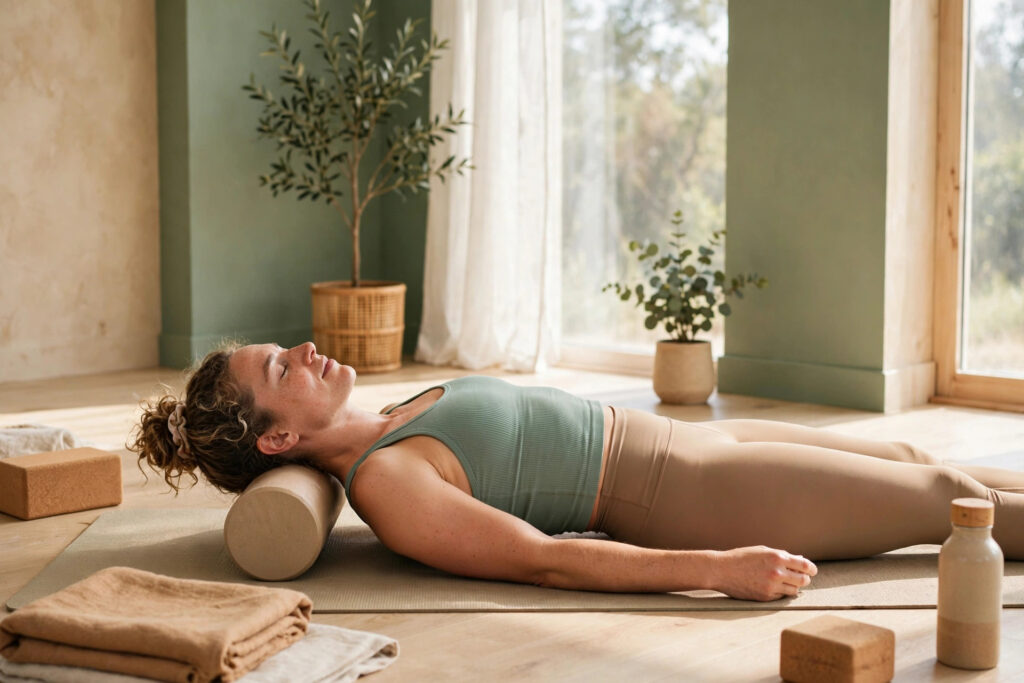
Foam rolling after yoga can be a useful cool-down: it may ease next-day soreness and calm tight calves, quads, glutes, and upper back. The catch is timing — roll after class, not before deep stretching — and keep pressure gentle, since a roller aids recovery but never replaces rest.
Walk out of any yoga studio on a weekday evening and you will spot the same scene: mats rolled up, water bottles in hand, and someone parked in a corner working a foam roller up and down their back. Foam rolling has moved from the weight room to the yoga crowd, and the promise sounds convincing — loosen everything, recover faster, feel brand new tomorrow.
The reality is quieter, and honestly more useful. Foam rolling after yoga is not magic. It will not erase a hard vinyasa session, and it will not fix a chronically tight hip. What it can do is modest and real: slow, deliberate pressure tends to ease the feeling of stiffness after class, and the ritual itself helps your nervous system downshift from practice to the rest of your evening. This guide covers when to roll, a simple 10-minute sequence that fits after class, how to breathe through it, and the mistakes worth avoiding.
Why After Class, Not Before Deep Stretching
Timing is the part most people get backwards. Foam rolling feels like a warm-up, but it works best as a cool-down — something you do once the practice is done, alongside or just before your final rest.
There is a straightforward reason. Long, slow yoga stretches lengthen muscles and settle the body into a calmer state. Rolling afterward gives tight spots a bit of extra attention while the muscles are already warm and pliable. Doing heavy rolling right before deep stretching can leave tissue feeling tender or overworked, which makes a passive pose like pigeon or a deep forward fold less comfortable, not more.
A simple rule of thumb: use the roller for general tightness and recovery after class. Save deep, sustained stretching for the class itself. If you want to roll before practice, keep it very light and brief — more like a hello to the body than a full session.
What Foam Rolling Actually Does
It helps to know what is happening when you roll, so you can keep your expectations honest. Foam rolling is a form of self-massage — sometimes called self-myofascial release. Sustained pressure over a muscle is generally thought to encourage blood flow to the area and temporarily reduce the feeling of tightness. That relief tends to last for a while, which is why rolling feels so satisfying in the moment.
What it does not do matters just as much. It does not change the structure of your muscles or permanently “break up” tissue, despite how dramatic that sounds. It does not replace sleep, hydration, or rest days. And it cannot fix an injury or a pain pattern that keeps coming back — that kind of problem deserves a qualified professional, not a louder roller.
The 10-Minute Post-Yoga Sequence
This sequence hits the four areas that tend to feel the most worked after a typical yoga practice: calves, quads, glutes, and upper back. Ten minutes, two to three minutes per area. Keep a mat or a soft floor underneath you, and keep the pace slow — slower than you think.
One ground rule for everything below: pressure should feel like a satisfying ache, never sharp or shooting. If you hold your breath or clench your jaw, you are pressing too hard. Back off.
1. Calves — 2 minutes
Sit with your legs extended and the roller under your calves, hands planted behind you for support. Lift your hips and roll from just above the ankle to just below the knee, back and forth, slowly. Cross one ankle over the other for more pressure, or keep both legs down for less. When you find a tender spot, pause there and take two slow breaths instead of rushing past it.
2. Quads — 2 to 3 minutes
Lie face down with the roller under your thighs, propped up on your forearms like a plank. Roll from just above the knee to the hip crease, keeping your core gently engaged so your lower back does not sag. This one tends to be intense for people who do a lot of lunges and warriors — expect it, breathe through it, and reduce your body weight on the roller if it gets too much.
3. Glutes — 2 minutes per side
Sit on the roller, cross one ankle over the opposite knee, and lean slightly toward the crossed side. Roll slowly across the outer hip and glute. This area carries a lot of the load in standing balances and hip openers, so a little attention here goes a long way. Switch sides and repeat.
4. Upper back — 2 minutes
Lie on your back with the roller across your shoulder blades, knees bent, feet flat, hands lightly behind your head. Lift your hips slightly and roll from the mid-back to the top of the shoulders. Let the chest open a little on each pass — a welcome counter to hours hunched over a desk. Skip the neck entirely; never roll over the cervical spine.
Breathe Through It
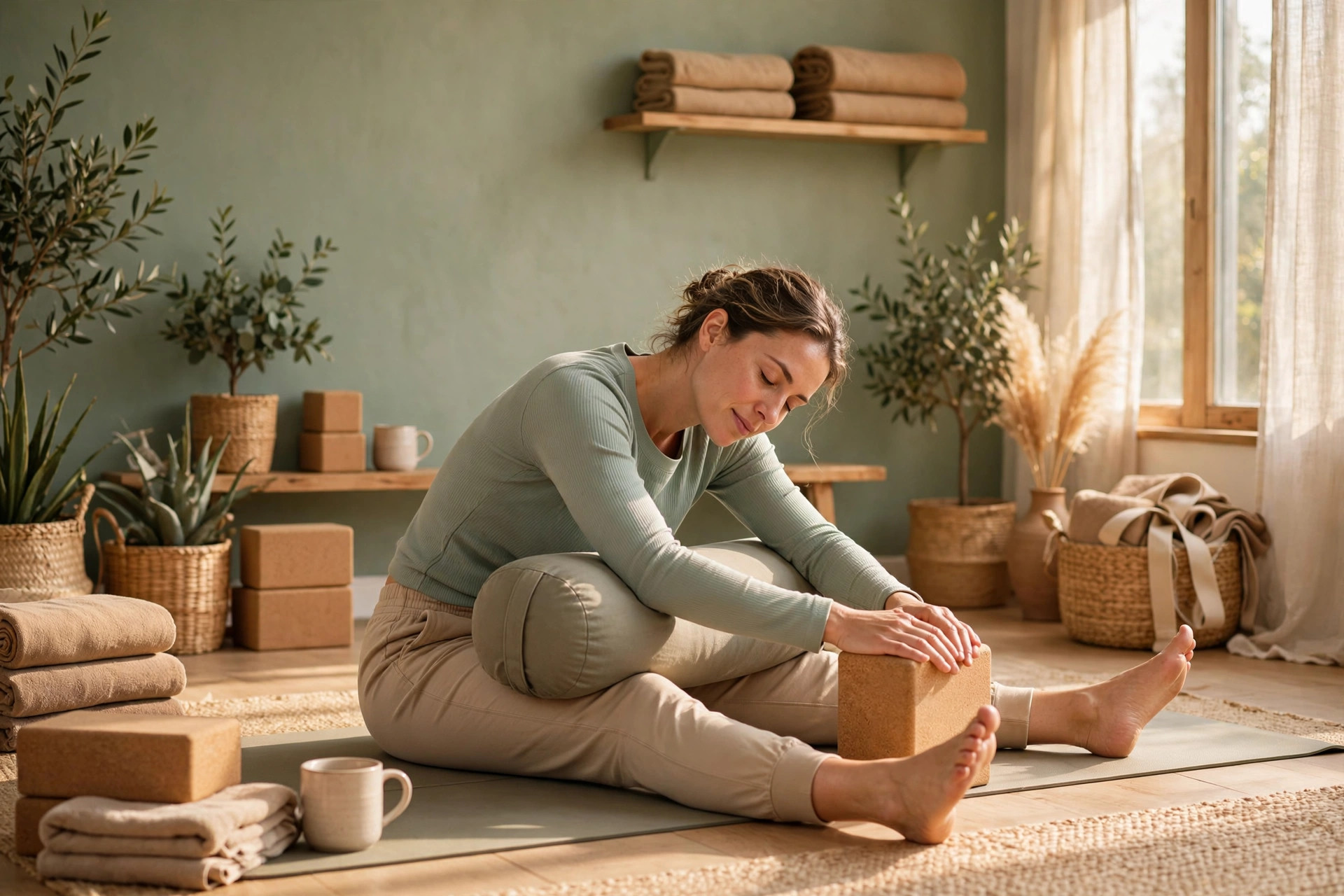
The breath cue for foam rolling is the same one you use in a challenging yoga pose: slow and steady, in through the nose and out through the mouth or nose. Exhale on the tender spots. That exhale is doing real work — it signals the body that there is no emergency, which is when muscles actually soften.
A practical pattern: inhale as you roll across an area, exhale as you pause on a tight spot. Count the exhale a little longer than the inhale if you can. If a spot makes you gasp or tense up, that is feedback, not failure — ease off the pressure and try again tomorrow. The goal is relaxation, not endurance.
Common Mistakes to Skip
- Rolling directly on joints. Foam rollers are for soft tissue — muscles, not kneecaps, elbows, or the spine’s bony bumps. Stay on the fleshy parts.
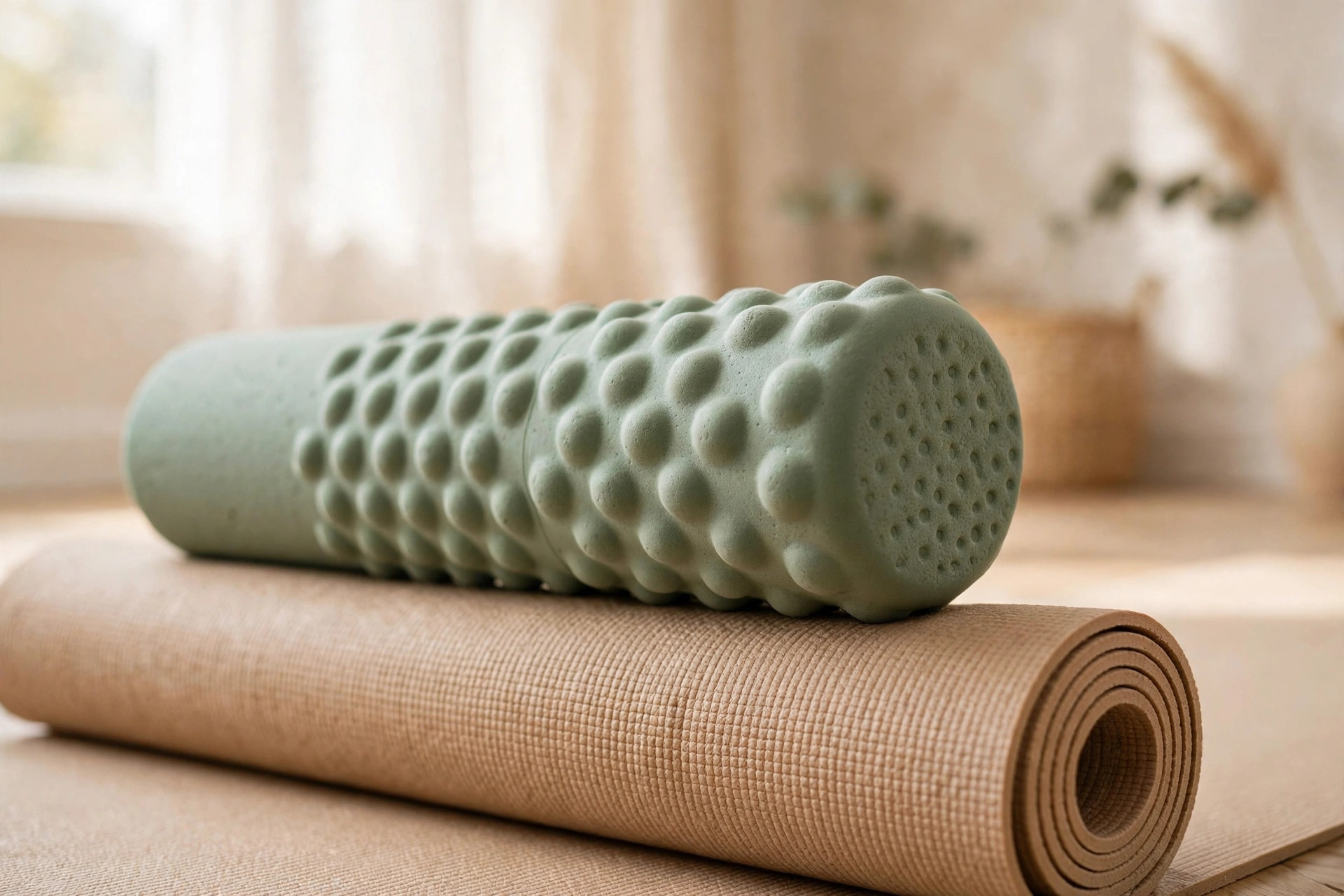
- Going too hard, too fast. Beginners do best with a smooth, medium-density roller and light body weight. The spiky, extra-firm models can wait. Pain is not progress.
- Speeding through it. Slow rolls — about an inch per second — give tissue time to respond. Whipping back and forth just makes noise.
- Expecting it to replace rest. Rolling does not stand in for sleep, an easier schedule, or a rest day. It is a complement, not a substitute.
- Rolling over an injury. A bruise, a fresh strain, or sharp, unexplained pain means skip the roller and get professional advice.
A Short Note on Rest
The quiet truth about recovery is that the biggest lever is not a tool at all — it is what happens between practices. Consistent sleep, regular meals with enough protein, water through the day, and one genuinely easy day a week will do more for your yoga practice than any gadget.
Think of the foam roller as seasoning, not the meal. Ten gentle minutes after class, a few breaths on the tight spots, and then the actual work of recovery: rest, eat, sleep, repeat. Your next practice will thank you for it.
Frequently Asked Questions
Is foam rolling before or after yoga better?
After. Roll once class is over, when muscles are warm and pliable. If you roll beforehand, keep it light and brief so tissue does not feel tender during deep stretches.
How often should I foam roll?
A few times a week is plenty for most people — for example, after your longest or hardest sessions. Daily rolling is fine too, as long as the pressure stays comfortable and you are not rolling over sore, injured tissue.
Why does foam rolling hurt sometimes?
Mild tenderness over tight areas is normal, especially in the quads and glutes after leg-heavy practices. Sharp, shooting, or bruising-level pain is not — ease off the pressure, move to a softer roller, or stop and check in with a professional if it persists.
Can foam rolling replace stretching?
No. Rolling and stretching do different things. Rolling applies pressure to soften the feeling of tightness; stretching lengthens tissue and trains range of motion. After yoga, a short rolling session pairs well with a few gentle stretches — one does not substitute for the other.
What kind of foam roller should a beginner get?
A smooth, medium-density roller of standard length (around 18 inches) is the safest starting point. It is versatile enough for calves, quads, glutes, and back. Save the textured, extra-firm rollers for later, once you know how your body responds to pressure.