You can build a strong, steady core without a single crunch. Yoga does it with planks, boat pose, dead-bug work, bridges, and standing balances that train your front, sides, and back together. Start with short holds, breathe slowly, and add time only when your form stays clean.
Maybe your neck aches halfway through a crunch set. Maybe your lower back does the talking instead of your stomach.
Or maybe crunches just bore you senseless.
Good news: you don’t need them. Yoga has been training the middle of the body for a long time, and it does it in a way that feels a lot more useful than curling up and down on the floor.
Your core is more than the front of your stomach
Here’s the bit people skip. Your core isn’t just the muscles you can see in a mirror.
It’s a team. The muscles along your front, the ones wrapping your sides, the deeper layers that brace your spine, and the ones across your lower back all share the work.
Yoga trains that team together. A forearm plank asks your front to hold firm while your shoulders and back stay engaged. A standing balance makes your sides work without you thinking about it. Nothing’s isolated, and that’s the point.
Think about what you need your core for:
- Standing tall through a long practice without your lower back sinking
- Moving from plank to chaturanga without your hips dropping
- Holding a twist without hauling yourself around with your arms
- Feeling steady — not shaky — when one foot leaves the floor
Every pose in this plan earns its place by training one of those jobs. No filler.
Why you can happily skip crunches
Crunches aren’t evil. They’re just narrow.
They repeat one motion — curling your spine forward — and leave out the sides, the back, and the deep bracing work. Do enough with tired form and your neck pulls, your hip flexors take over, and your stomach clocks out. Sound familiar?
Life rarely asks you to curl forward over and over. It asks you to stay still under load, resist wobbling, and hold a position while your arms and legs do something else. Yoga core work matches that far better, because so much of it is about holding steady rather than crunching through reps.
So you’re not losing anything by dropping crunches. You’re swapping one small motion for a whole system.
The five moves that do the heavy lifting
You don’t need twenty exercises. You need five good ones, done well, a few times a week. Each includes a starting point you can adjust — the right dose is the one you can do with clean form.
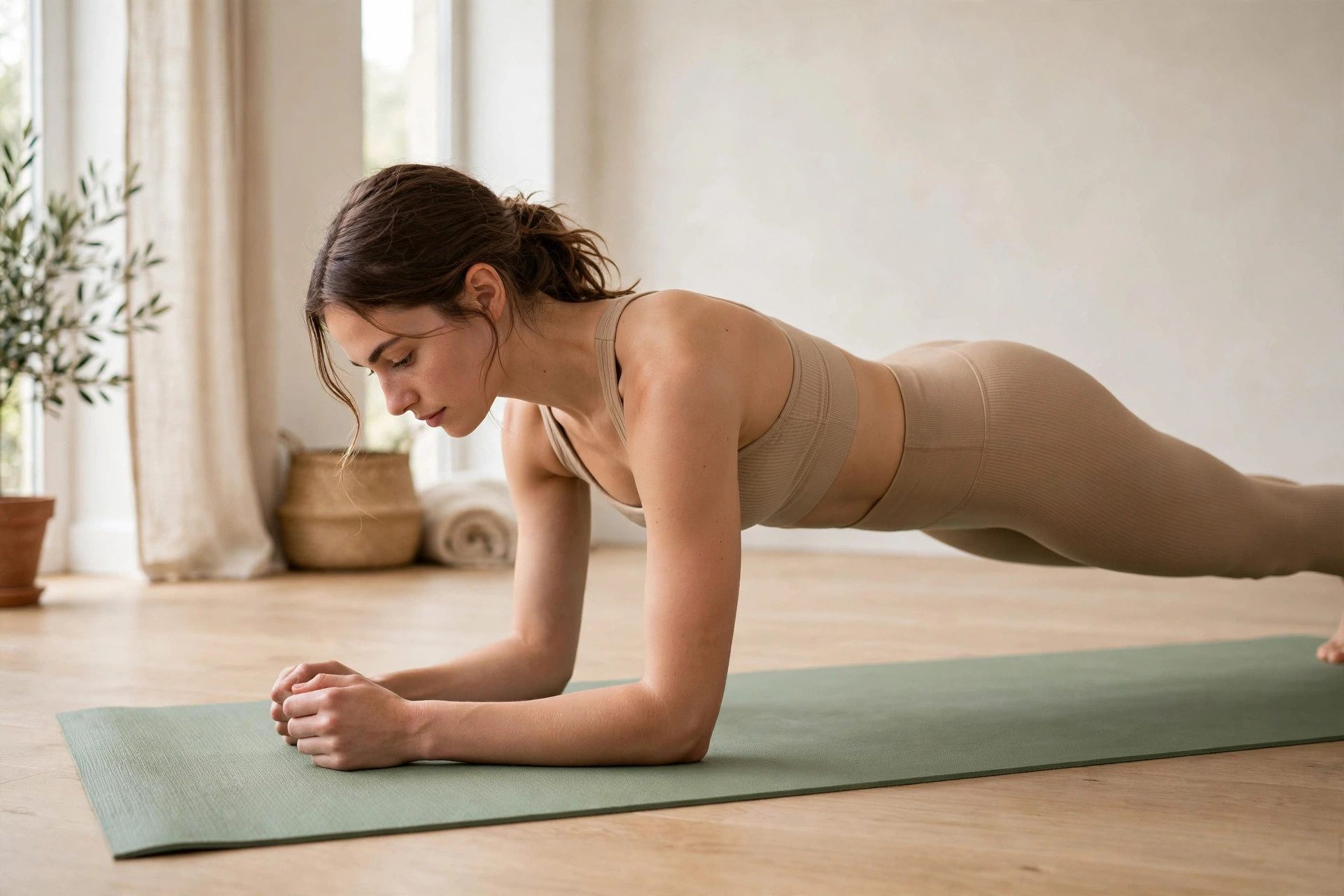
1. Forearm plank
Elbows under shoulders. Forearms flat, or hands clasped — your call.
Step your feet back, press the floor away, and make one long line from head to heels. Check two things: your hips aren’t piking up, and they aren’t sagging. Both mean your middle has stopped doing its share.
Start with 3 rounds of 20 to 30 seconds. Rest between rounds. When 30 seconds feels steady — no shaking hips, no held breath — stretch toward 45 seconds.
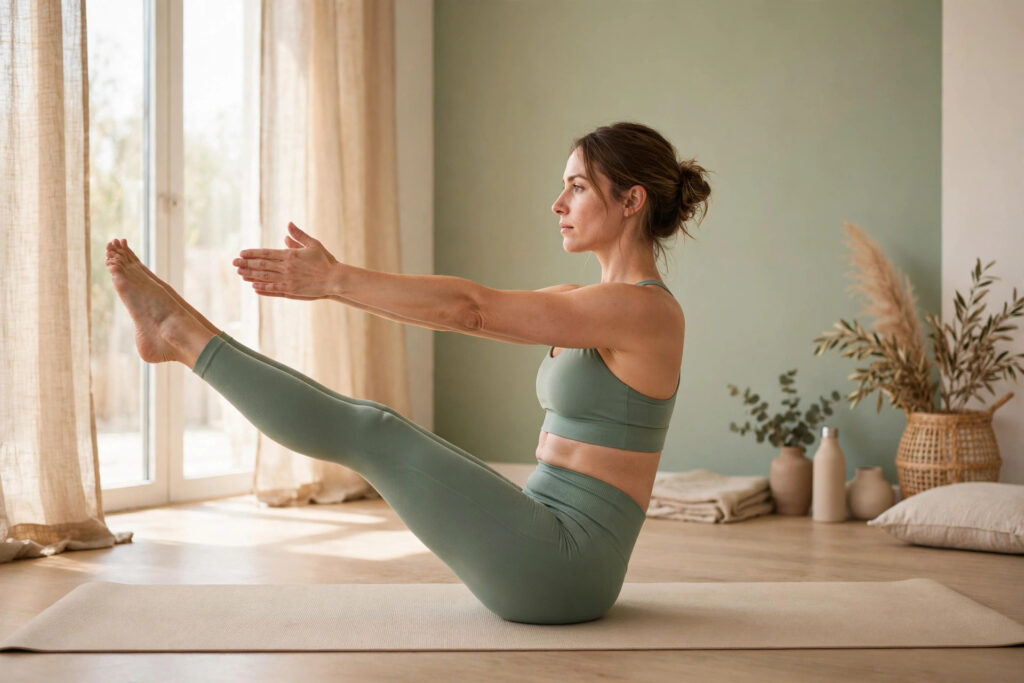
2. Boat pose (navasana)
Sit tall, knees bent, feet flat. Lean back a little, lift your feet, and find the edge where your stomach switches on.
That’s your working spot. Stay there.
Shins parallel to the floor is plenty for most people. Straight legs can wait — weeks, if that’s what it takes. A bent-knee boat with a tall chest beats a straight-leg boat with a rounded back every time — the bent version keeps the work in your core, not your neck and hip flexors.
Try 3 rounds of 15 to 25 seconds. Shake your legs out between rounds. Boat gets spicy fast, and that’s fine.
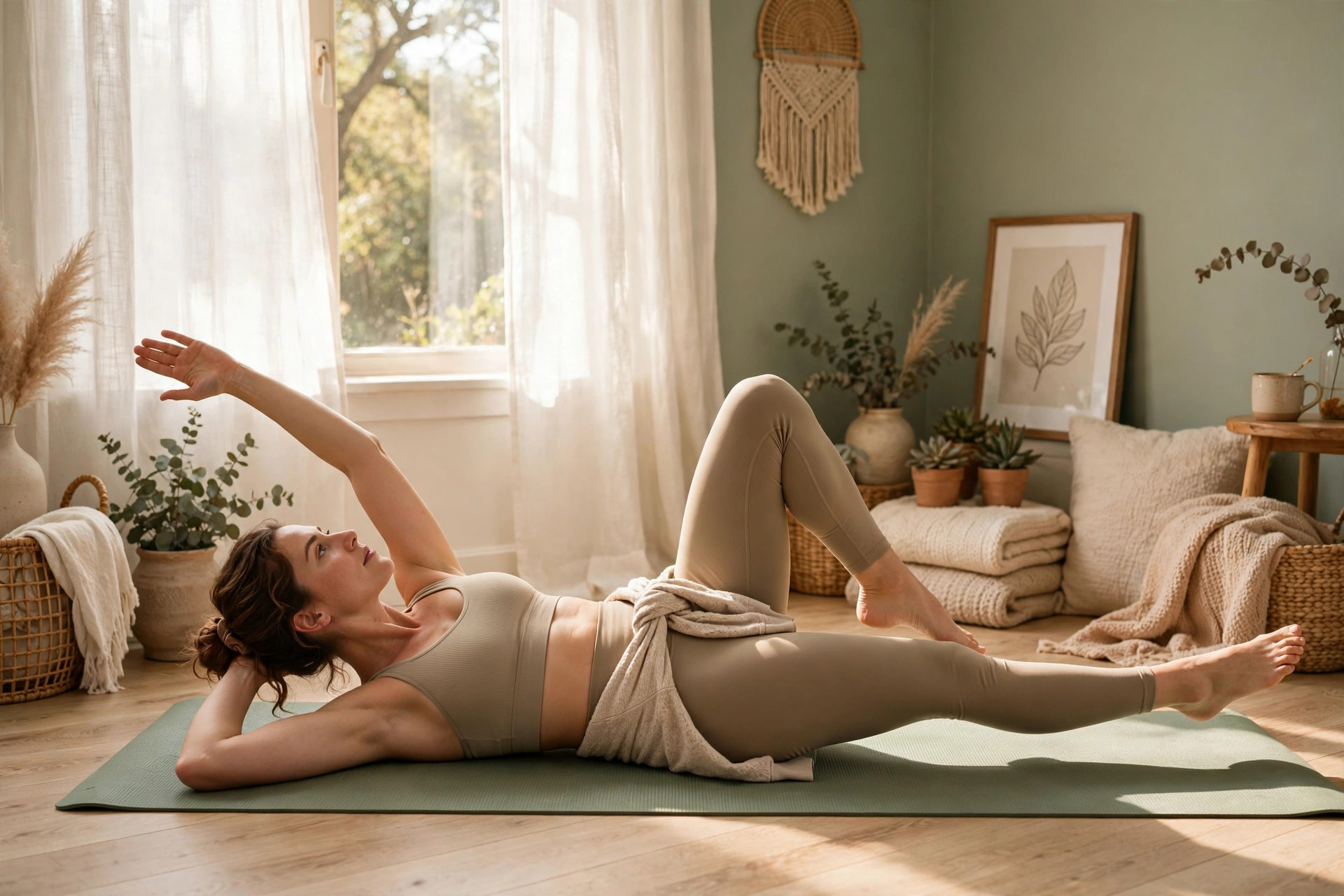
3. Dead bug
Don’t let the silly name fool you. This one teaches control better than almost anything else on the list.
Lie on your back, arms up, knees bent over your hips. Press your lower back gently into the mat. Then, slowly, lower your right arm and left leg toward the floor. If your back arches off the mat, you’ve gone too far — pull the range back in.
Aim for 6 to 8 slow reps per side. Exhale as you reach, inhale as you return. If you rush it, it stops working, so don’t rush it.
Halfway check: what should this feel like?
A good core session feels like effort in the middle of your body. Not pain. Not a pinch in your lower back, not a pull in your neck.
You’ll shake a bit. That’s normal. But if your form falls apart, come out. Rest. Go again. Two clean rounds beat five sloppy ones, and it isn’t close.
Can’t feel a move at all? Slow down, make the range smaller, and breathe out as you start. The exhale is a cheat code here: it naturally switches your deeper core muscles on.
Two more moves to round out the back and sides
4. Bridge pose
Your back side needs work too, and bridge delivers it quietly.
Feet flat, knees bent. Press through your heels and lift your hips until your thighs and torso form a line. Squeeze your glutes at the top — really squeeze — then lower slowly, one bit of spine at a time.
Do 8 to 10 slow reps, or hold the top for 20 to 30 seconds. If your lower back does everything, lower your hips a touch and push harder through your heels.
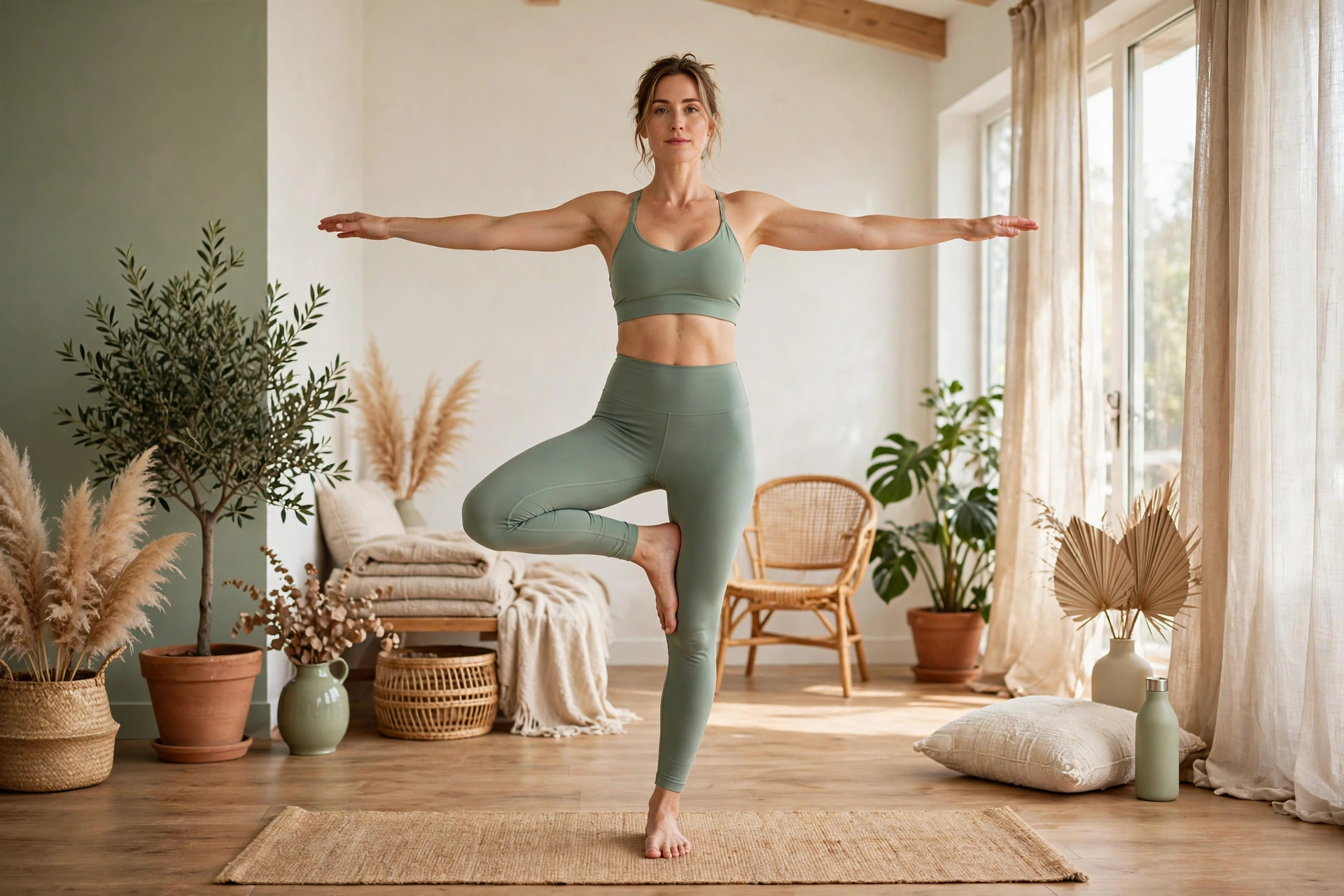
5. Standing balance work
Tree pose looks gentle. Your core knows otherwise.
Stand on one leg and your sides fire constantly, making tiny corrections so you don’t topple. Lift the other foot to your calf or inner thigh, and fix your eyes on one still point. Wobbling isn’t failure here — wobbling is the training.
Hold 20 to 30 seconds per side. Use a wall if you need one. There’s no prize for falling over with style.
Your simple weekly training plan
Three sessions a week works well for most people, with at least one rest day between sessions. Each session takes roughly 15 to 20 minutes, tacked onto a regular practice or done on its own.
- Warm up (2 minutes): cat-cow stretches, a few slow rounds, then a minute of easy standing twists.
- Dead bug: 6 to 8 reps per side, slow and controlled.
- Forearm plank: 3 rounds of 20 to 45 seconds, resting as needed.
- Bridge: 8 to 10 slow reps, or two 20-second holds.
- Boat pose: 3 rounds of 15 to 25 seconds.
- Standing balance: 20 to 30 seconds per side, each leg.
- Finish (1 minute): knees to chest, gentle rocking, a few deep breaths.
Short on time? Cut the session in half rather than skipping it. Plank, dead bug, one balance per side, done. A short session you actually do beats a perfect plan sitting in your notes app.
How to progress, week by week
Progress doesn’t have to be dramatic. Small steps are how this sticks.
- Weeks 1–2: learn the shapes. Use the shorter holds. Rest whenever form slips.
- Weeks 3–4: add 5 to 10 seconds to your plank and boat holds, or add one extra round.
- Week 5 onward: pick one harder option — a longer balance hold, slower dead-bug reps, or straight-leg boat for a few seconds at a time.
One rule keeps you honest: only progress what stays clean. A longer plank that sags like a hammock isn’t progress. It’s just longer.
Form cues that change everything
Tiny adjustments. Big difference.
Breathe out on the effort. Starting on an exhale helps your deeper core switch on. Holding your breath just makes everything rigid and shaky.
Ribs down, don’t flare. In plank and boat, draw your front ribs gently down toward your pelvis. If your ribs pop up and your back arches, your core has left the chat.
Move slower than you want to. Speed hides cheating. Slow reps don’t let you use momentum, so the muscles you came for have to show up.
What to wear for core work (it matters more than you’d think)
Core work means holds, twists, and legs in the air. Pick a waistband that stays put — a high, firm one usually behaves better than a low, soft one, and you don’t want every rest break spent pulling leggings up. For tops, go fitted or tuckable: a loose tee falls over your face in plank, and yes, it’s as annoying as it sounds.
Mistakes that quietly stall your progress
Holding your breath. It’s the most common one. If you can’t breathe steadily through a hold, the hold is too long. Shorten it.
Chasing time instead of shape. A long plank with sagging hips trains your lower back to complain, not your core to strengthen. Stop when the shape goes.
Doing core work only once in a while. One heroic session a fortnight won’t do much. Short, regular sessions will.
Skipping the back and sides. Front-only training leaves gaps you’ll feel in balances and twists. That’s why bridge and standing work are in this plan — don’t cherry-pick.
Frequently asked questions
Can yoga really build core strength without crunches?
Yes. Planks, boat pose, dead bug, bridge, and standing balances train the front, sides, and back of your core together, mostly through holding steady under control. That bracing strength transfers well to balances, twists, and everyday movement — and none of it needs a crunch.
How often should I do this core plan?
Three sessions a week is a solid starting point for most people, with at least one rest day in between. Each session takes about 15 to 20 minutes. If you’re new to core work, start with two sessions a week and add the third when the holds feel manageable.
How long before I notice a difference?
It varies. Many people find holds feel steadier and balances less wobbly after a few weeks of regular practice, but there’s no fixed timeline. Judge progress by what you can hold with clean form, not by the calendar — if your plank stays tidy for longer than it did last month, that’s real progress.
My lower back hurts during plank. What should I change?
Come out of the pose first. Then try a shorter hold, drop to your knees, or lift your hips very slightly so your back isn’t sagging — a sagging plank loads the lower back instead of the core. If back pain keeps showing up across sessions, get it checked by a qualified professional before pushing on.
Do I need any equipment for this plan?
No. A mat helps for comfort on forearm plank, dead bug, and bridge, and a wall is handy for balance practice, but that’s it. Everything in this plan uses your body weight and the floor.